AI in Chemical Engineering: Transformative Tools and Future Innovations
 Globorious Team
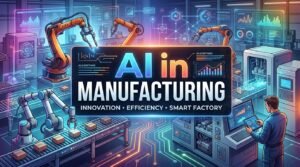
The field of chemical engineering is currently undergoing a radical digital transformation, driven by the integration of Artificial Intelligence (AI) and Machine Learning (ML). Traditionally reliant on empirical testing and manual process control, the industry is shifting toward "smart" manufacturing, autonomous laboratories, and predictive molecular design. By leveraging AI, chemical engineers can now accelerate the discovery of novel materials, optimize complex reaction kinetics in real-time, and significantly reduce energy consumption across large-scale industrial plants. This technological leap not only enhances operational efficiency but also paves the way for sustainable engineering solutions that were previously unimaginable.
Top 50 AI Tools and Platforms for Chemical Engineering
1. AspenTech Aspen AIoT Hub
A comprehensive suite designed to integrate industrial AI into process manufacturing for improved asset performance. It enables chemical engineers to create hybrid models that combine first-principles engineering with machine learning.
2. Schrödinger
A leading platform for molecular modeling that uses AI-driven physics-based simulations to accelerate drug discovery and materials science. It is essential for chemical engineers working in specialty chemicals and pharmaceuticals.
3. Citrine Informatics
The Citrine Platform uses AI to accelerate the development of new materials and chemicals. It utilizes a data-driven approach to predict material properties and optimize experimental design.
4. Kebotix
Known for its "Self-Driving Lab" technology, Kebotix uses AI and robotics to automate the discovery and production of advanced chemicals. It streamlines the R&D cycle from molecular design to physical synthesis.
5. Uncountable
An R&D data management platform that uses machine learning to help chemical engineers analyze complex datasets and optimize formulations. It helps labs move away from siloed spreadsheets to a unified AI-powered environment.
6. Noble.AI
Noble.AI provides Science-Based AI to help engineers and scientists build predictive models much faster than traditional methods. Their platform specializes in chemical and material informatics for product development.
7. C3 AI
C3 AI offers a massive suite of enterprise AI applications specifically for the energy and manufacturing sectors. It helps chemical engineers predict equipment failure and optimize supply chain logistics.
8. Honeywell Forge
An enterprise performance management software that leverages AI to provide real-time insights into plant operations. It focuses on maximizing process efficiency and safety in chemical processing plants.
9. AVEVA PI System
A data management foundation that allows chemical engineers to collect and structure industrial data for AI analysis. It is the industry standard for real-time data monitoring and historical analysis.
10. DeepChem
An open-source library that provides high-quality deep learning tools for drug discovery, materials science, and quantum chemistry. It is a vital resource for chemical engineers developing custom ML models.
11. RDKit
A collection of cheminformatics and machine learning tools used to manipulate chemical structures and calculate descriptors. It is widely used for chemical data preparation in AI workflows.
12. TensorFlow
An end-to-end open-source platform for machine learning that chemical engineers use to build complex neural networks for process modeling. Its flexibility allows for both research and large-scale industrial deployment.
13. PyTorch
A machine learning framework that provides a seamless path from research prototyping to production deployment. Many chemical engineering researchers prefer PyTorch for its dynamic computational graph and ease of use.
14. Scikit-learn
A simple and efficient tool for predictive data analysis built on NumPy, SciPy, and matplotlib. It is the go-to library for traditional machine learning algorithms like regression and clustering in chemical engineering.
15. MATLAB (AI and Statistics Toolbox)
MATLAB offers specialized toolboxes for deep learning and reinforcement learning tailored for engineering applications. It is frequently used for control system design and process simulation in the chemical industry.
16. Wolfram Mathematica
Provides a comprehensive environment for technical computing, including advanced AI capabilities for symbolic and numeric chemistry. It is used for modeling reaction networks and thermodynamic properties.
17. ChemDraw (with Cloud/AI integration)
The standard tool for chemical drawing now includes integrated AI search and property prediction features. It helps engineers quickly visualize and analyze chemical structures and reactions.
18. Enthought
Enthought provides specialized digital transformation services and tools for scientific computing. They help chemical companies build custom AI solutions for materials discovery and analytical chemistry.
19. Materials Project
A massive open-access database of calculated material properties that integrates with AI for high-throughput screening. It allows chemical engineers to find materials with specific properties using machine learning models.
20. Citrination
The data management and AI platform from Citrine Informatics tailored specifically for materials and chemicals. It provides a collaborative space for engineers to store and analyze R&D data.
21. TIBCO Spotfire
An analytics platform that allows chemical engineers to visualize large datasets and apply predictive analytics. It is often used for real-time monitoring of refinery and chemical plant operations.
22. Domino Data Lab
An Enterprise AI platform that helps teams manage the entire machine learning lifecycle. It is used by chemical companies to scale data science across their research and manufacturing departments.
23. Databricks
A unified data analytics platform that is ideal for processing massive datasets from chemical sensors and laboratories. It supports collaborative AI development and large-scale data engineering.
24. Azure Machine Learning
Microsoft's cloud-based platform for building, training, and deploying ML models. It offers specific industry solutions for chemical engineering to improve yields and optimize energy usage.
25. AWS SageMaker
A fully managed service from Amazon that provides every developer with the ability to build and deploy ML models quickly. It is used in the chemical industry for predictive maintenance and quality control.
26. Google Vertex AI
A unified AI platform that helps chemical engineers deploy and scale machine learning models. It provides advanced tools for computer vision and structured data analysis in industrial settings.
27. Ansys (AI-driven simulation)
Ansys integrates AI with computational fluid dynamics (CFD) to provide faster and more accurate simulations of chemical reactors. This reduces the computational time required for complex fluid and heat transfer problems.
28. COMSOL Multiphysics
A simulation software that now incorporates machine learning for surrogate modeling of complex physics. It is vital for chemical engineers designing fuel cells, reactors, and electrochemical systems.
29. Dassault Systèmes BIOVIA
BIOVIA provides biological and chemical modeling and simulation environments. It leverages AI to facilitate "virtual labs" where new compounds are designed and tested digitally.
30. Siemens gPROMS
Advanced process modeling software that uses digital twins and AI to optimize the design and operation of chemical processes. It focuses on high-fidelity modeling and data-driven optimization.
31. Keras
A high-level neural networks API that acts as an interface for TensorFlow. Chemical engineers use Keras for fast prototyping of deep learning models for classification and regression tasks.
32. Pandas
The essential Python library for data manipulation and analysis. It is the foundation for almost every AI project in chemical engineering involving time-series data or lab results.
33. NumPy
The fundamental package for scientific computing with Python. It provides the mathematical foundation for AI algorithms used in chemical engineering simulations and data processing.
34. Dask
Dask provides multi-core and distributed parallel execution of Python code. It allows chemical engineers to run AI models on datasets that are too large for a single machine's memory.
35. H2O.ai
An open-source machine learning platform that focuses on automated machine learning (AutoML). It helps chemical engineers build models without needing deep expertise in coding AI algorithms.
36. DataRobot
An AI platform that automates the end-to-end process for building and deploying machine learning models. It is frequently used in the chemical industry for demand forecasting and predictive maintenance.
37. RapidMiner
A data science platform that provides a visual workflow designer for machine learning. It allows process engineers to build predictive models for plant operations without writing extensive code.
38. KNIME
An open-source data analytics platform that uses a node-based interface. It is highly popular in cheminformatics for building AI pipelines to screen molecular databases.
39. Alteryx
An analytics automation platform that simplifies data preparation and advanced analytics. It helps chemical engineers blend data from different sources to feed into machine learning models.
40. Palantir Foundry
A data integration and analysis platform used by large chemical companies to harmonize data across the enterprise. It supports AI-driven decision-making in manufacturing and supply chain management.
41. SparkCognition
An industrial AI company that provides software for predictive maintenance and asset protection. It uses AI to identify anomalies in chemical plant equipment before failures occur.
42. Uptake
Uptake provides AI-driven insights for industrial asset performance management. Their software helps chemical plants reduce downtime and improve the reliability of critical machinery.
43. Seeq
Seeq specializes in advanced analytics for process manufacturing data. It enables chemical engineers to quickly find insights in time-series data using machine learning and diagnostic tools.
44. Falkonry
An AI platform for high-speed industrial data that provides automated discovery of operational patterns. It helps chemical engineers improve throughput and quality by identifying process variabilities.
45. Quartic.ai
A platform designed to help chemical engineers build AI-powered digital twins and applications. It focuses on real-time process optimization and autonomous control for chemical manufacturing.
46. Element Analytics
Element focuses on industrial data management to make AI and analytics more effective. Their "AssetHub" helps chemical companies organize sensor data into a structured format for ML model training.
47. Braincube
An IIoT platform with built-in AI tools for manufacturing optimization. It helps chemical engineers identify the best operating parameters to maximize yield and minimize waste.
48. Eigen Innovations
Uses AI and computer vision to monitor and control industrial thermal processes. It is particularly useful in chemical manufacturing where temperature profile monitoring is critical for quality.
49. Sight Machine
A manufacturing data platform that uses AI to provide visibility into every machine, line, and plant. It helps chemical companies optimize their entire production footprint in real-time.
50. Augury
Provides AI-powered machine health solutions that use vibration and ultrasonic sensors. It helps chemical engineers monitor the health of pumps, compressors, and agitators to prevent unplanned outages.
Conclusion
The integration of AI into chemical engineering is no longer a futuristic concept—it is a present-day necessity for companies aiming to remain competitive. From the molecular scale with tools like DeepChem to the industrial plant level with Honeywell Forge and AspenTech, AI is providing the insights needed to solve the industry’s most pressing challenges. As these 50 tools and platforms continue to evolve, they will empower chemical engineers to design more efficient processes, discover sustainable materials faster, and operate plants with unprecedented safety and precision. Embracing these AI technologies is the key to unlocking the next generation of chemical engineering excellence.